The Sun Also Rises

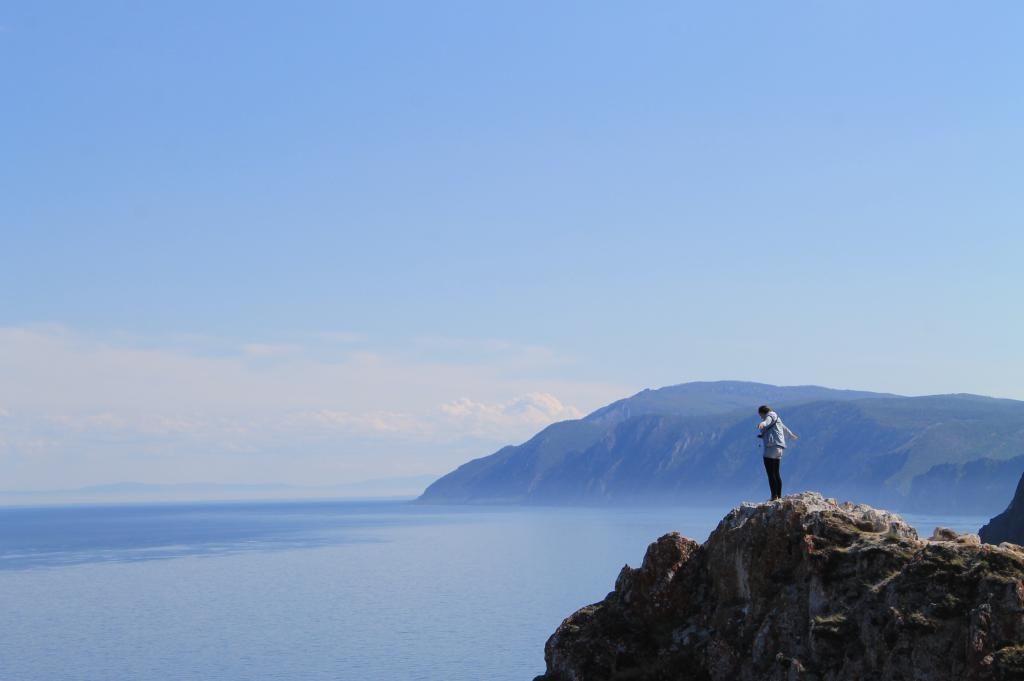
Olkhon. Have you ever heard of such a place? It is the largest island in Lake Baikal, with a combination of harsh, steep cliffs and rolling green hills. It is beautiful.

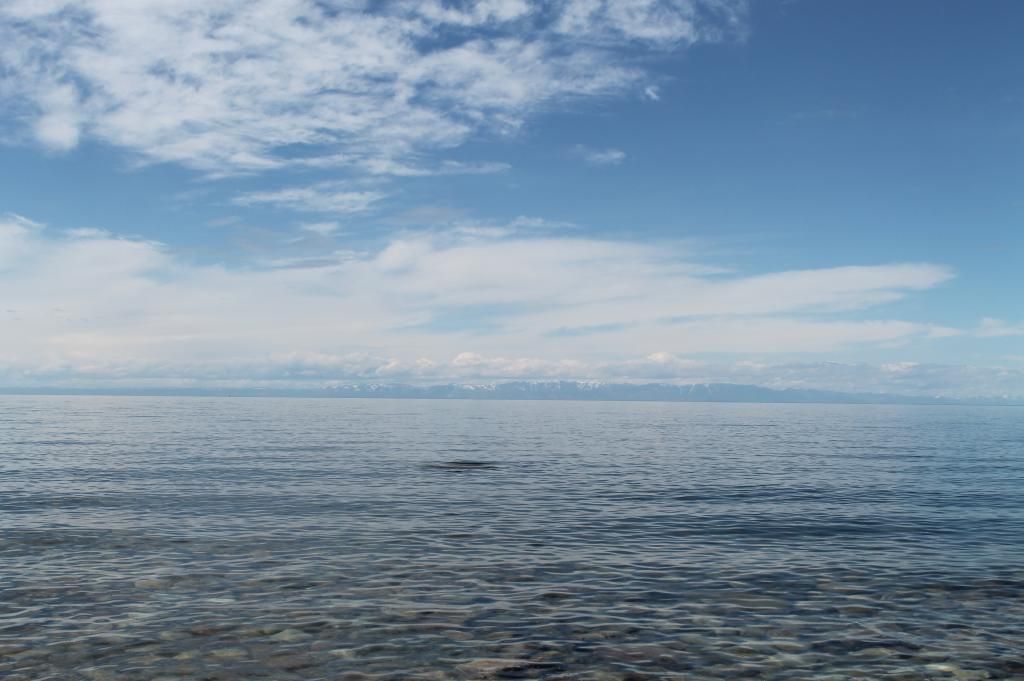
The view from our hotel.


When Russian explorers came to Baikal in the 17th century, Olkhon was the first place they visited. The island is considered the sacred center of Baikal, filled with legends, 143 archaelogical objects, and many holy places. It is certainly unlike any other place I’ve ever seen.
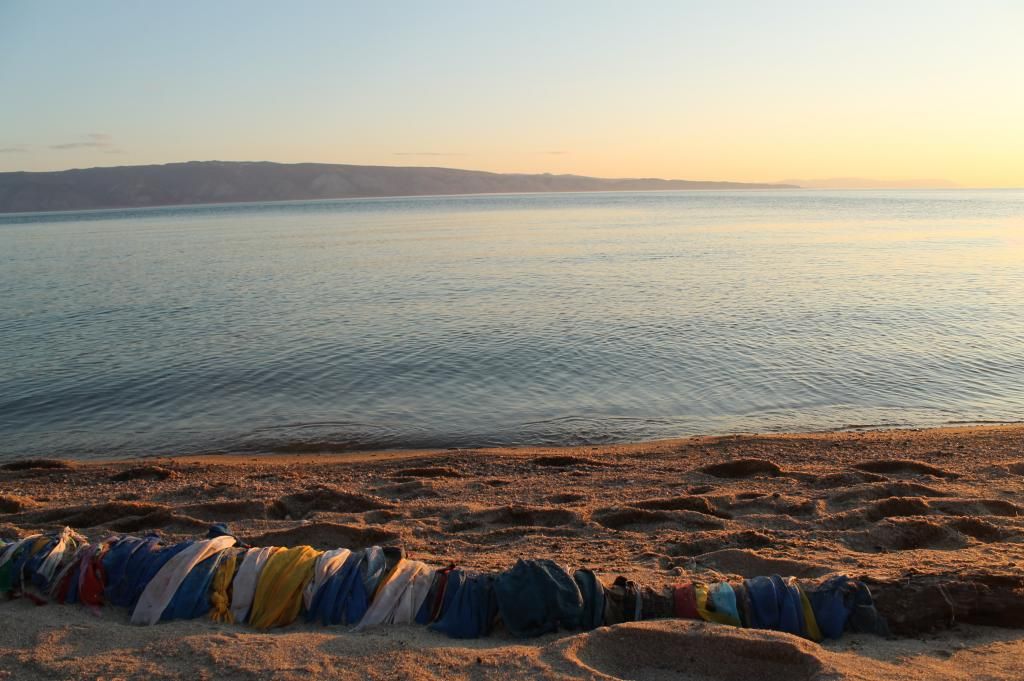
Although we were exhausted when we got there, we decided to wake up very early the next morning to see the sunrise over the island.


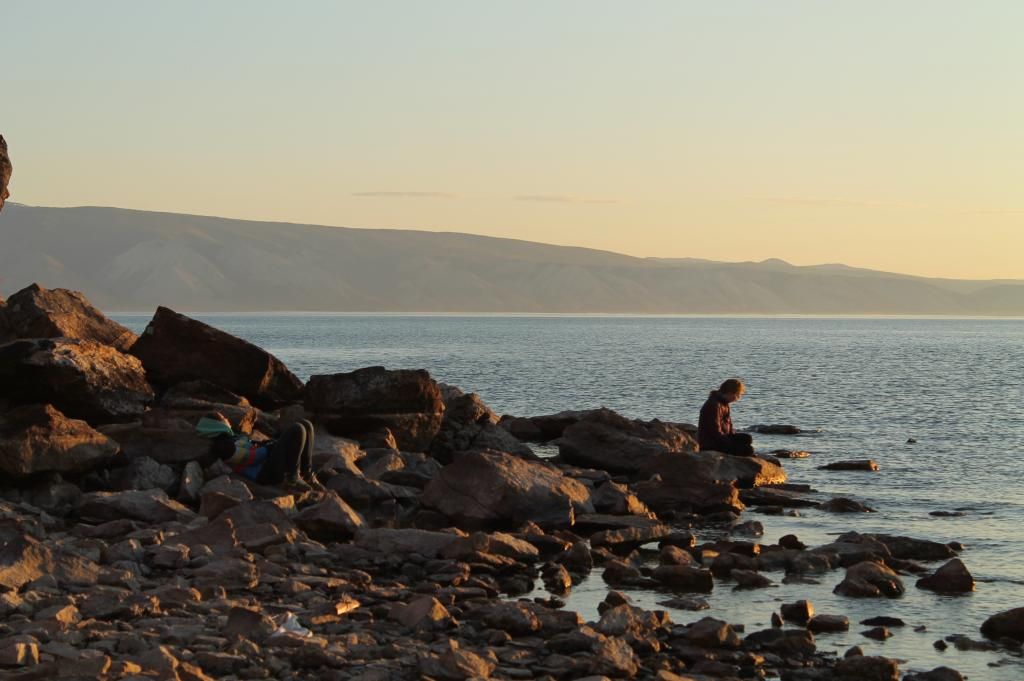
Kaylin on the rocks.


We sat on the rocks and watched the sun spill out over this sacred lake. I’m not sure if I’ll ever get to see Olkhon again, but it’s certainly got a special place in my memories.

Yanzhima's Rock

If you read Lily’s blog, then you’re already familiar with the beauty of the Barguzin Valley.

These snow-capped mountains are unforgettable.


Driving through this stretch of land, you might chance upon herds of horses, a winding stream or two, or, as we did, a newly-built datsun.

According to our guide, a few years ago, an image of the dancing goddess Yanzhima was discovered on a rock in this area (Yanzhima is the goddess of fertility in the Buryat Buddhist tradition). Childless couples began flocking to this area, praying for fertility. When the area saw an increase in child births, the area was declared sacred and a datsun was soon built.
Since then, Yanzhima’s rock has gained much attention and attracts thousands of hopeful couples. Countless toys have been placed on the rock as offerings to the goddess.

Visiting sacred places, I always get the feeling that they’ve always been there, perhaps for thousands of years. Seeing this datsun, however, shows that sacred places are still springing up, perhaps a result of a very active religious community.

The Cleanest Water in the World

There’s something magical about water, I think, and I’ve been fascinated by it all my life. On family trips to Lake Michigan, I was always the first one in the water and the last one out; baths were always a momentous occasion for me; and I still love going to the car wash, putting the car in neutral, and sitting back to watch the water spray over all the windows.
I’m not the only one fascinated with this mysterious force. Images of water occur over and over again in literature, representing birth and death, peace and violence, and an unchanging, sustaining, yet destructive force. It is also essential to mankind’s existence, used not only for cleaning, transportation, and manufacturing, but also (most importantly) for drinking. However, although 70% of the Earth is covered in this life-giving substance, only 3% of it is drinkable. 77% of that is frozen, and one can only imagine the effects pollution has on these numbers. There is one region in the world, however, that has held its own against these statistics.

Lake Baikal is located in the southern region of Siberia, between Irkutsk and the Buryat Republic. It is the deepest lake on Earth, as well as one of the most ancient, estimated to be around 25-30 million years years old. It’s most remarkable characteristic, however, is its cleanliness. You can drink this pure water straight from the lake. This is due to a unique group of organisms, Epischura baicalensis. Belonging to the zooplankton species, these tiny animals are responsible for keeping the lake clean of impurities and are unique to Baikal—they cannot survive in any other body of water. Thousands of species inhabit this lake, most of them endemic. This includes our class favorite, the nerpa seal.
It is clear that this body of water is sacred to local inhabitants. One of our guides, Evgeny Dmitrievich, told us that most of them don’t carry bottles of water, finding no problem in drinking straight from one of the many streams that run from the lake. Another guide from the Baikal Museum proudly boasted that the people who inhabit the Baikal region live longer, healthier lives.
Because the lake is so life-giving, many myths and legends exist. For example, if you dip your hands into the lake, you will be rewarded with 1 extra year of life. Dip your feet, and you get 2 extra years. Dunking your head into the lake will grant you 5 extra years of life. Full submersion will extend your life by 25 years. That is, if the cold doesn’t kill you first.
Baikal contains 20% of the world’s unfrozen freshwater. Currently, many research projects are being conducted, studying the ecology of the lake and its creatures, trying to unravel the many mysteries of this sacred sea.

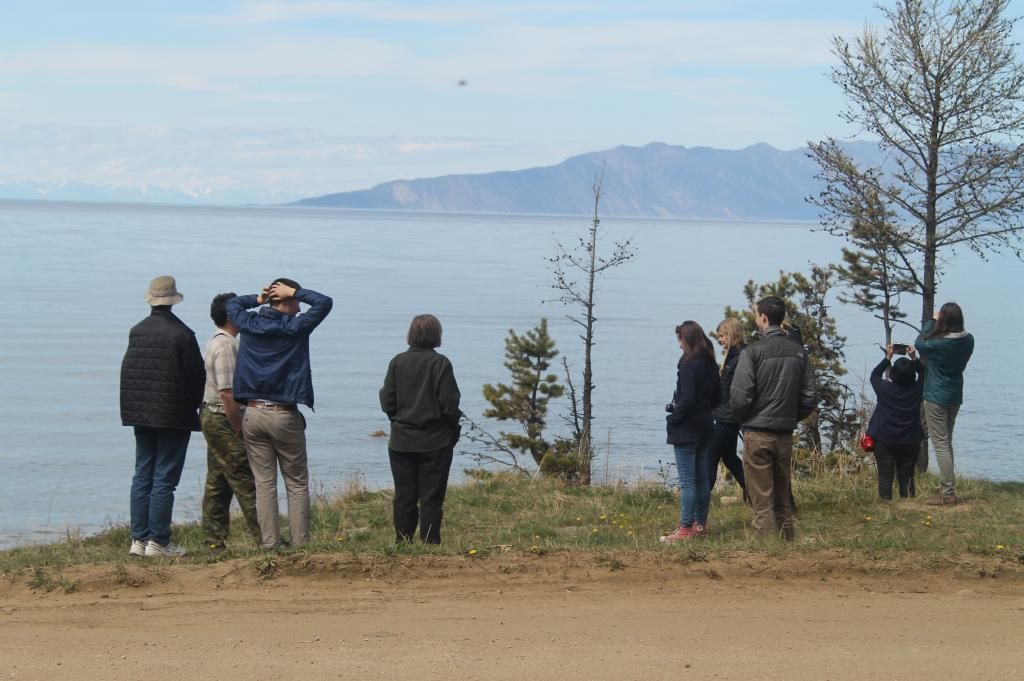
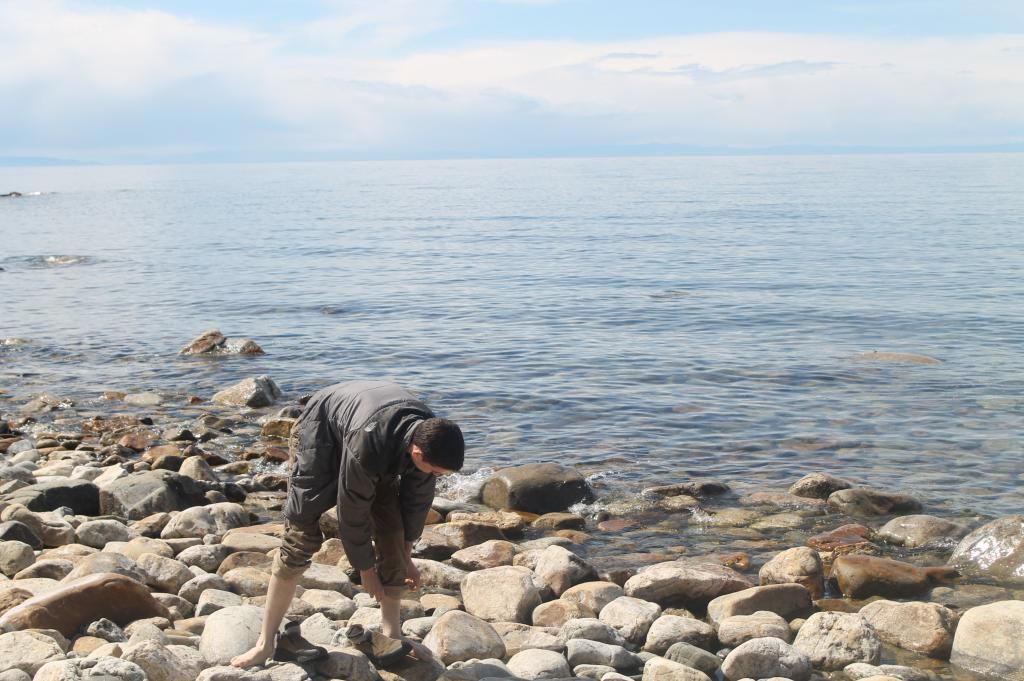
Our first time setting foot on the shore of Lake Baikal.


James getting ready to dip his 


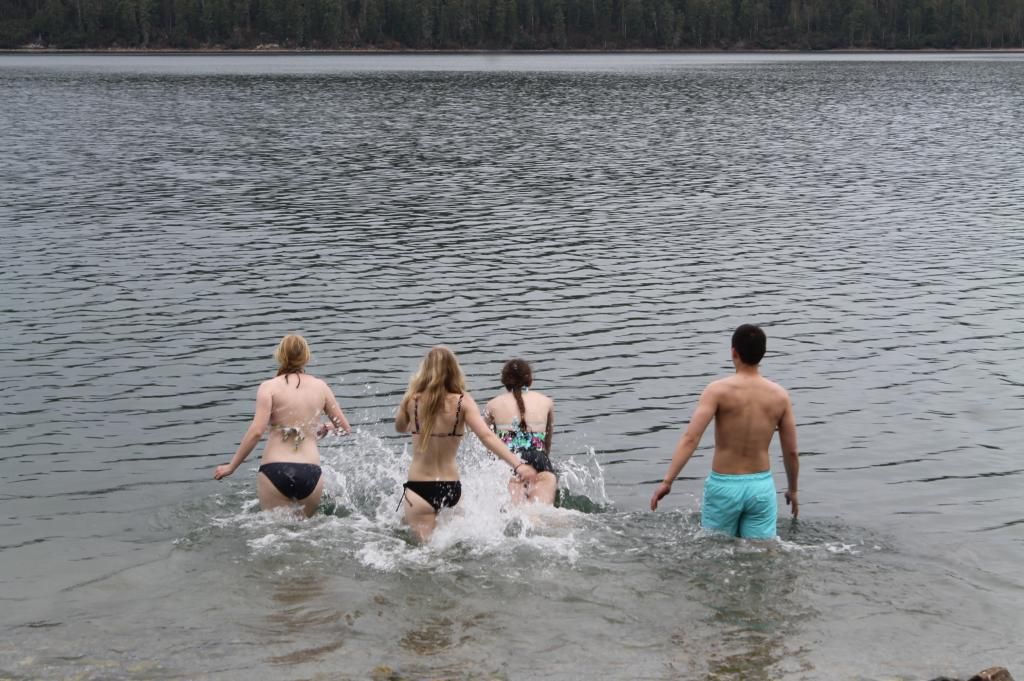
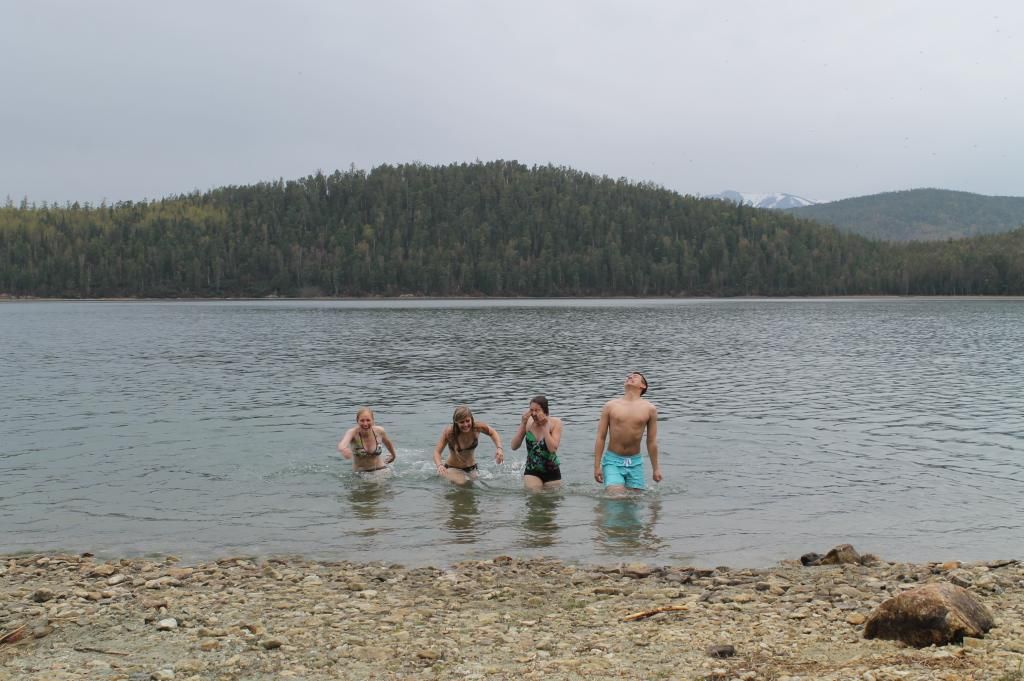
We got a chance to jump in the lake a few days later.


The temperature that day was about 38 degrees fahrenheit. This was maybe a little too cold for Chet.


Luckily, we were able to warm up in a nearby hot spring.


We Are Mushrooms

I’m sure you’ve come to find out that Russian is a hard language. It is no secret among the Carleton students. For example, did you know that there are about a hundred and fifty thousand ways to say you are going somewhere? Okay, maybe that’s an exaggeration, but, here, let me lay it out for you.

You can say: Ya hodila v kinoteatr–I went by foot to the movie theater.

Or, if you want to say you went to the movies in a car: Ya ezdila v kinoteatr–I went by car to the movie theater.

But wait! These words imply multi-direction, meaning that I went there and back. What if we want to say that I am going there in one direction, in the continuous tense?

Then you say: Ya idoo v kinoteatr–I am going by foot to the movie theater.

Or: Ya edoo v kinoteatr–I am going by car to the movie theater.

Did you think that was the end of it? Because there are also prefixes you attach to verbs of motion to change the meaning.

If you want to say you entered a theater by foot, you say: Ya voshol v kinoteatr–I am entering the theater by foot.

Or if you want to express that you are arriving at the theater, but not entering it, you say: Ya prikhazhoo v kinoteatr.

You can also say you are going around the theater (obkhozhy), approaching the theater (podkhozhy), going up to the theater (dokhozhy), passing the theater (prokhozhy), or perhaps just dropping by the theater (zakhozhy). And don’t forget about other modes of transportation. These rules apply to flying, swimming, running, crawling, climbing, carrying something. There’s even a word for carrying something heavy. And that’s just the present tense.

Oy. It’s things like these that get me all mixed up when I’m trying to say I took the metro to Red Square last Monday.

I also get my words mixed up. My most recent blunder was when I asked someone if it was rude to decline food at the dinner table (a problem very likely in Russia, as most hosts love to feed their guests). She gave me a blank look when I asked her. I repeated my question and, when I saw that Tell-Tale Squint, I gave up and explained in English. She immediately started laughing. I suddenly realized my mistake. The word for ‘rude’ is groobiy. I had been saying gribiy the whole time, meaning I had asked her if we were being mushrooms at the dinner table.

Once again: oy.

Captain Picard is very disappointed.

Captain Picard is very disappointed.

The Thing About the Trees

One thing I’ve noticed about Russians since coming here in April is their affinity for painting things. Street curbs, steel fences, and children’s playgrounds are all painted bright colors, lighting up streets and neighborhoods.

A Playground in the US

A Playground in the US


A Playground in Russia

A Playground in Russia


Most interesting of all, however, are the trees.
Trees outside the Dormition Cathedral in Vladimir.

Trees outside the Dormition Cathedral in Vladimir.


Walking through parks, I often found trees with their trunks painted white and wondered for what purpose.This seems to be a common practice, as I’ve seen it in Vladimir, Suzdal, Gagarin, and even in Ulan Ude, a city in the Eastern Siberian region. Was there a superstition I was unaware of? Perhaps the white paint kept life-sucking spirits away?
I finally asked Lera, an MGU student who had spent a year at Carleton, and the answer was actually a lot more boring than I thought. The white paint is actually an insecticide. It prevents bugs from eating away at the bark and damaging the trees.
I suppose this explanation is a lot closer to my guess than I let on, but it just goes to show that sometimes its not all myths and legends in Russia.

A Time for Playing

I’m pretty sure by this point, people on this program are tired of me using the size of my family as an excuse to horse around.

Just a bunch of adults hanging out at the Kremlin.

Just a few adults hanging out at the Kremlin.


But it’s true, I miss my family sometimes. I have 3 brothers, a sister, a 2-year-old niece, and many younger cousins who are often found running around the house. I’ve gotten used to wrestling away the X-Box remote for another round of Halo, teasing my little brothers about their playground romances, and surprise attacks that end with me buried under a pile of screaming children. It’s really quality family-bonding.
Yesterday, I found myself in quite a similar situation.

The Malishok Children’s Home


The Carleton Moscow program has donated children’s clothes and books to the Malishok Children’s Home since 2005. Our group personally delivered 3 large duffel bags filled with clothes.

Actually, the boys did all the carrying while we nervously awaited the children.


Located in Ulan Ude, Russia, the home cares for 90 children, a majority of which are boys. According to the director, 70% of these children are placed into families, often times back into their own. The reason for this, the director said, was that it was often the parents who had a problem caring for their children. This has slowly been improving, however, as efforts have increased for self-improvement on parents’ behalf.
As soon as the kids saw us, their faces lit up with joy. The director of the home was happy to consent to the use of these photos.

They especially took a liking to Chet.


We were at the home for about an hour and half. During this time, we played with the children, who were more than happy to climb all over their new friends. Within just a few minutes, a little girl in a purple dress grabbed my hand and asked if “she could fly.” I immediately picked  her up and she didn’t leave my side for the rest of the time.
While there, the kids noticed my camera and asked me to take a photographs of them. They were surprised to see themselves on the little screen–“Just like on TV!” Suddenly, they were climbing all over me, asking to have a try.

Little Isa took these lovely photos.


By the end of it all, we said goodbye to our friends. We were exhausted, but very happy to have spent time with them.

The King of Satyricon

There’s nothing I love more than an evening at the theater, especially when it comes to Shakespeare. I didn’t know what to expect, however, when we went to the Satyricon Theatre to watch an adaptation of King Lear—Shakespeare in Russian is an intimidating thought.
The play was magnificent. There was blaring, circus-like music playing at all the right moments, robotic dancing between scenes, and strange costuming (King Lear’s servant, for example, wore a black overcoat with nothing but a leotard underneath). It perfectly captured the King Lear’s descent into the world of dementia.
What I was most impressed with, however, was the performance of the leading actor, Konstantin Raikin.
Raikin as King Lear

Raikin as King Lear

Lera, our Russian friend, had mentioned that he was good. But I had no idea that he was this good. Just to give you an idea: Raikin was awarded the Meritorious Artist of Russia in 1985, People’s Artist of Russia in 1993, the Order of the Merit for the Fatherland, and a national theater Golden Mask. And to top it all off, he is the director of the Satyrikon Theater.
konstantin-raikin
We watched King Lear a week ago and I am still starstruck. It is definitely a performance I will never forget.

A Week of Spectacles

This week must be our fancy week. On Sunday, we went to the Kremlin Palace to watch a ballet adaptation of Sleeping Beauty. Formerly the tsar’s Moscow residence, the Kremlin Theatre serves as a venue for operas, ballets, and concerts, acting as a second stage for the Bolshoi.

Our handsome group at the Kremlin Palace Theatre


It was only fitting, then, that we go to the Bolshoi Theatre as well. Located just across the street from the Kremlin, this theater is world-famous and tickets for “good seats” can be very expensive. However, if you’re willing to arrive early enough to place your name on a waiting list, you might find a place in the nosebleed section for a very good price. On Tuesday, we were able to get tickets for 100 rubles (about 3 US dollars). The opera, The Tsar’s Bride, was the first that I’d ever seen and did not disappoint, although it did require a bit of craning of the neck.

“НЕУДОБНОЕ МЕСТО” literally means uncomfortable seat. At least they’re honest.


Success!


On the highest balcony of the Bolshoi.


And The Bells Kept Ringing…

One afternoon after class, I went with an MGU student, Olga, to Beliy Gorod, or, White Town. This district encompasses the central region of Moscow that contains the Kremlin, Bolshoy Theatre, and other cultural giants.
We came upon a beautiful yellow church, large and filling the Bolshaya Nikitskaya Street.

The Greater Church of Christ’s Ascension was built in the beginning of the 19th century under Prince Potemkin. It was in this church that Alexander Pushkin married Natalia Goncharova. In 1931, the church was shut down and the iconastasis burned. The church was re-opened in 1990 for worship.
We lazily walked through the courtyard. As Olga explained the history of the church, a cat lounged in the sun, old women sat on the benches and fed birds, the breeze swept through the grass—in short, it was a beautiful day. And then the bells started ringing.
We thought nothing of it and continued walking at our same leisurely pace. But the bells kept ringing… and ringing… and ringing. Confused, I checked my watch: it was about 4:23pm, an arbitrary time for the bells to be tolling. Olga wondered if she had perhaps forgotten about a holiday. We looked around for any evidence of special processions. Nothing.
We stood in front of the church and listened for a while longer. There were no signs of stopping, so we continued down the sidewalk, the sound of bells fading away behind us.

The Lion and the Puppy

In a side street in the center of Moscow stands a quiet, yellow house of two stories. Past the gate and through the door, you’ll find the house once belonged to the great Lev Tolstoy.

Leo Tolstoy

Leo Tolstoy at his summer residence in Yasnaya Polyana


Tolstoy is regarded as one of the greatest novelists of all time. Included in his repertoire are his most famous works, War and Peace and Anna Karenina, as well as numerous short stories, plays, essays and autobiographies.
His home is filled with his belongings, including his furniture, drawings, and photographs of the years he spent in Yasnaya Polyana with his 13 children. It is easy to imagine Tolstoy spending his winters here, toiling over Death of Ivan Ilyich, among other works.
As I explored the house, I came across a room filled with illustrations and children’s books. Upon closer inspection, I saw that they had all been written by Tolstoy. I then realized that I didn’t know anything about this literary giant.
Seeing a lack of schools in the country side, Tolstoy had opened a school for peasant children so that they could learn to read, write and draw. With a lack of quality schoolbooks, Tolstoy undertook the task of writing them himself. One book in particular caught my interest.
 The Lion and the Puppy
This story is about a caged lion that befriends the puppy that is intended for his meal. You can read it for yourself here. And, if you’re interested, you can read the Russian text. It is quite short and includes an introduction explaining Tolstoy’s endeavor to educate children. I highly recommend reading. You might, like myself, learn a thing or two about Tolstoy.